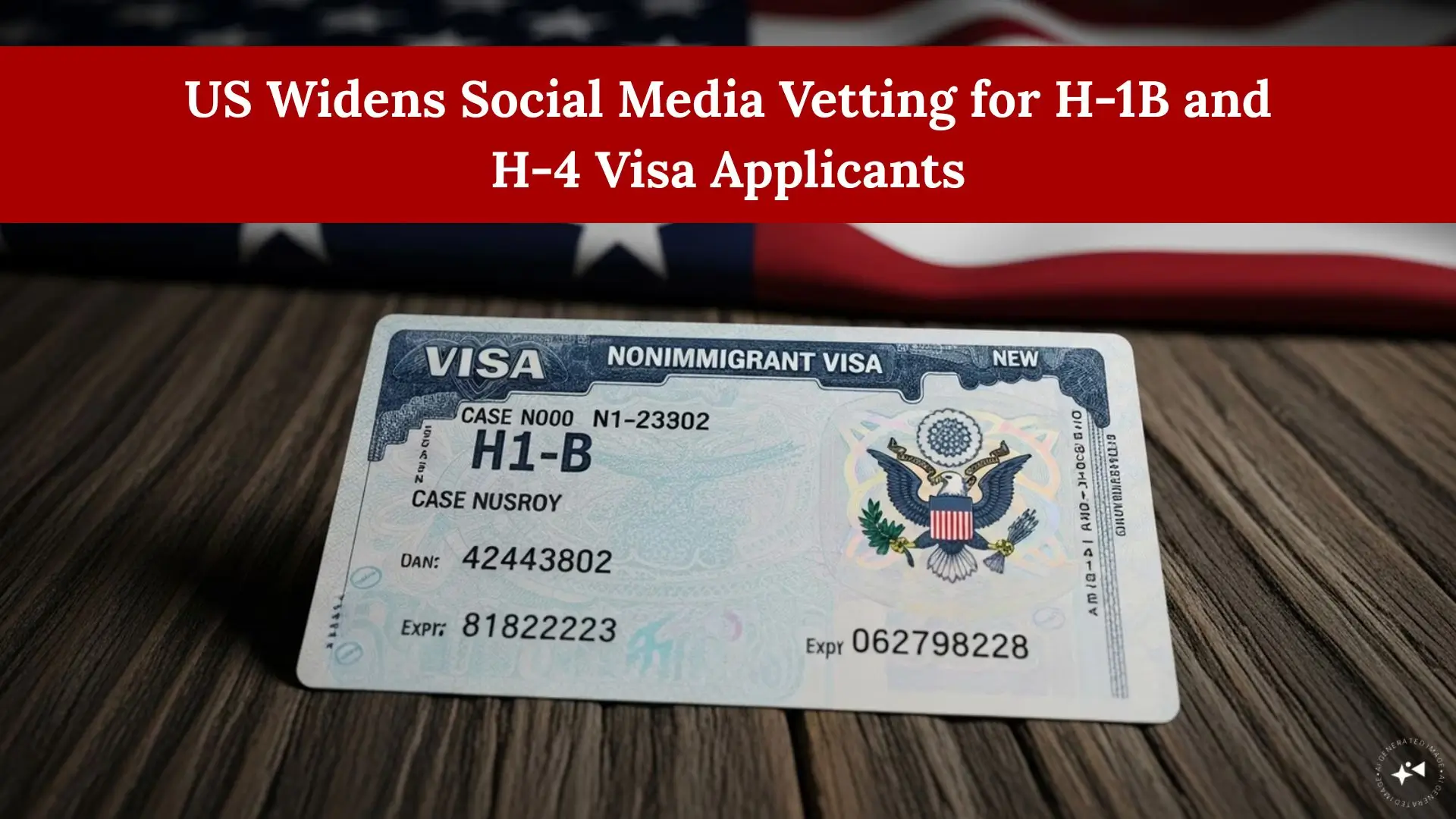
US Widens Social Media Vetting for H-1B and H-4 Visa Applicants – New Rules from December 15. The United States has introduced another major change in its visa screening system—this time targeting H-1B skilled workers and their dependents on H-4 visas. Starting December 15, 2025, every applicant in these categories will undergo mandatory social media vetting, a process previously limited mostly to students and exchange visitors.

This new rule signals Washington’s stronger focus on digital footprints as part of national security checks. For thousands of applicants worldwide, this update means preparing their online profiles carefully before submitting a visa application.
US Expands Social Media Review to H-1B & H-4 Visa Holders
The US Department of State has confirmed that it will now review the online presence of all H-1B and H-4 applicants, bringing these categories under the same digital scrutiny faced by F, M, and J visa applicants.
This includes:
- H-1B skilled workers
- H-4 dependents (spouse and children)
- New applicants and renewal applicants
Officials say this update is part of a broader strategy to strengthen national security and prevent misuse of US visa programs.

What Prompted the New Digital Vetting?
The notice released on December 3 clearly directs applicants to set their social media profiles to “public.” This ensures that consular officers can review:
- Posts
- Comments
- Photos
- Groups
- Interactions
- Public activity across platforms
A senior State Department official stated that the expanded review helps ensure applicants “do not intend to harm Americans or national interests.”
The government believes social media behavior can offer insights into a person’s intentions, affiliations, and public conduct—making it a key element of modern security checks.
What Does This Mean for H-1B and H-4 Applicants?
This policy change affects applicants in several ways:

1. Social Media Review Is Now Mandatory
Every H-1B/H-4 applicant must undergo online presence evaluation.
This is no longer optional.
2. Privacy Settings Must Be Public
Applicants are instructed to make their profiles accessible. Hidden or restricted accounts may raise concerns.
3. Consular Officers Will Review Past Activity
This includes:
- Public posts
- Likes and comments
- Shared content
- Membership in groups
- Public statements
4. Digital Footprints Could Influence Visa Decisions
If anything online appears suspicious or contradicts visa statements, it may impact:

- Eligibility
- Approval chances
- Security flags
- Processing times
Why Is the US Focusing on Digital Footprints?
According to the Department, every visa adjudication is a national security decision. In recent years, online activities have become a major part of identity verification.
The US says digital vetting helps:
- Detect fraud
- Identify security risks
- Monitor extremist affiliations
- Verify personal information
- Strengthen visa screening reliability
This aligns with global trends, where governments increasingly use social media to assess credibility and track online behavior.
Impact on H-1B Workers and Families
The expansion affects both primary workers and dependents:

For H-1B Workers
- Must ensure professional conduct online
- Posts critical of US policies may attract scrutiny
- Any extremist, violent, or misleading content can raise red flags
For H-4 Dependents
Even if dependents are not employed, their digital activity will still be reviewed.
For Children on H-4 Visa
If a minor has social media activity, it may also be considered.
How Applicants Should Prepare
Here are simple steps applicants can follow:
Review Your Past Posts
Remove content that may appear:

- Offensive
- Political
- Misleading
- Inconsistent with your visa purpose
Avoid Fake or Duplicate Accounts
Multiple accounts under the same name may raise suspicion.
Maintain a Professional Tone
Especially on LinkedIn and other public platforms.
Make Profiles Public (as instructed)
Ensures smooth vetting without unnecessary delays.
Avoid Controversial Groups
Membership in banned or extremist groups will result in immediate review.
What This Means for Future Visa Screening
The US is signaling a long-term shift toward data-driven, tech-enabled immigration checks. Digital vetting may expand further to include:
- More nonimmigrant visa categories
- Employment-based immigrant visas
- Green Card applicants
With rising global security concerns, cross-checking online activity is likely to become a permanent part of visa processing.
Conclusion
The expansion of social media vetting to H-1B and H-4 applicants marks a major shift in how the US screens visa applicants. With digital footprints now under official review, applicants must manage their online presence responsibly to avoid delays or complications during visa processing.