
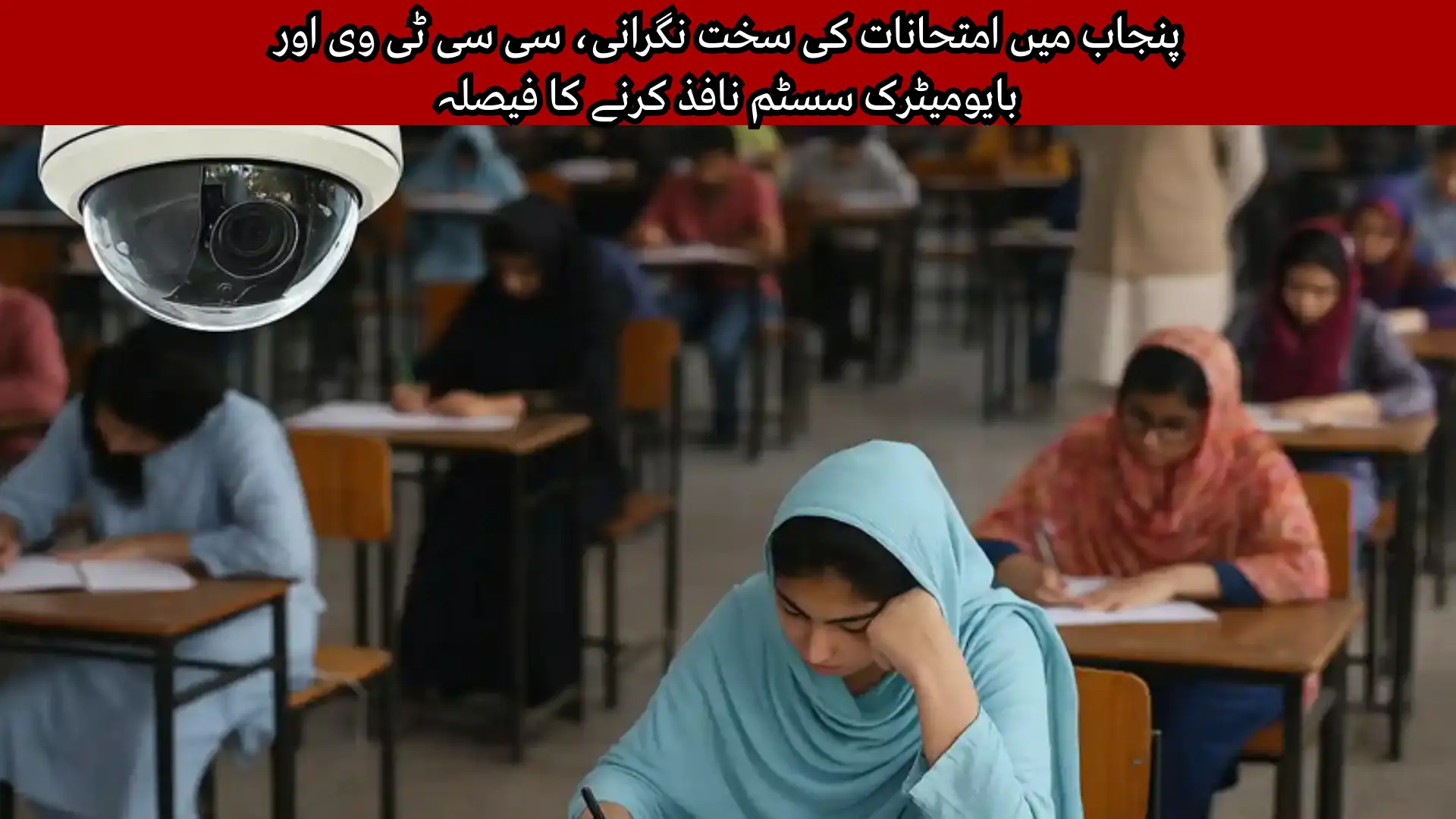
Punjab to Deploy CCTV Cameras and Biometric System for Strict Exam Monitoring. Punjab is moving toward a stricter and more transparent examination system as the Board of Intermediate and Secondary Education (BISE) Rawalpindi announces new surveillance and monitoring measures. The decision comes after Commissioner Rawalpindi Aamir Khattak took charge as the acting Chairman of BISE Rawalpindi.

During his first official meeting, Khattak directed the immediate installation of CCTV cameras across all sensitive examination centres and the introduction of a biometric attendance system at marking centres. The move aims to eliminate long-standing issues such as paper leaks, favouritism, examiner negligence, and irregularities during board exams.
Zero-Tolerance Policy for Exam Mismanagement
After assuming the new role, Khattak made it clear that the government will follow a zero-tolerance policy toward any form of malpractice. He instructed board officials to:

- Ensure full CCTV coverage inside exam halls
- Enforce biometric attendance for all marking staff
- Resolve all pending disciplinary cases within one week
- Set up a dedicated examination control room for real-time monitoring
He added that transparency, fairness, and discipline in Punjab’s examination system “will not be compromised under any circumstances.”
Preparations for 2026 SSC & HSSC Exams
Board officials also briefed the commissioner on the ongoing preparations for the upcoming 2026 annual exams.

Expected candidates:
- 243,064 students for SSC First Annual Examination 2026
- 157,856 students for HSSC First Annual Examination 2026
The large number of candidates further highlights the need for upgraded exam monitoring tools and strict oversight mechanisms.

Additional Measures to Improve Transparency
Officials informed the commissioner that several new steps are underway to strengthen the entire examination process. These include:
- Monitoring of practical labs and marking centres
- Pre-exam training for supervisory staff
- A new online bill-receiving system for exam staff
- Immediate action against examiners if marking mistakes are proven
These reforms aim to modernize the examination system and rebuild trust among students, parents, and teachers.

Chairman’s Post Still Vacant
One major concern raised during the meeting was the prolonged vacancy in the role of BISE Rawalpindi’s permanent chairman. The position has been vacant since October 17, after the completion of former chairman Muhammad Adnan Khan’s three-year term.
The Punjab government has not yet appointed a regular chairman, leaving the board to function under temporary leadership.

High-Level Meeting in Rawalpindi
The strategic meeting took place at the Commissioner’s Office in Rawalpindi and was attended by senior officials from both the district administration and BISE Rawalpindi. The session focused on restoring exam credibility and ensuring an error-free assessment process for the 2026 academic year.
Conclusion
Punjab’s decision to adopt CCTV surveillance, biometric verification, and centralized monitoring marks a significant step toward improving exam transparency. With thousands of students preparing for SSC and HSSC exams, these reforms are expected to strengthen the integrity of the province’s entire examination system.