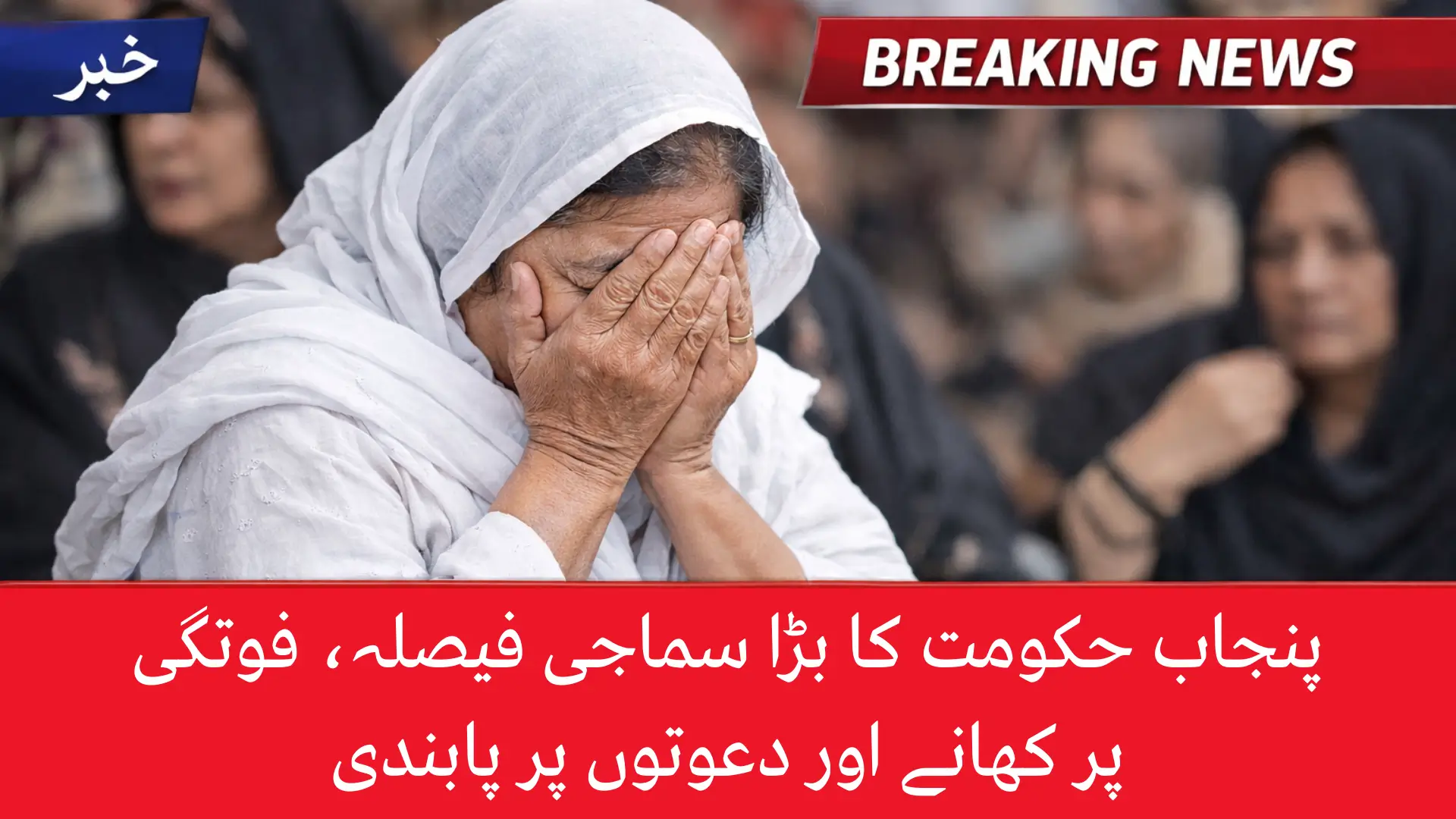
Punjab Government Bans Cooking and Feasts After Death. The Punjab government has announced a province-wide ban on cooking, food distribution, and funeral feasts after a death. The decision is being described as a strong social reform aimed at reducing financial stress on families during times of grief.

Officials say the new policy promotes simplicity, patience, and prayers instead of costly social customs. Across Punjab, many citizens believe this move can bring long-needed cultural change.
Punjab Government’s Important Decision Explained
The Punjab Government has decided that no family should feel forced to arrange meals for large gatherings after losing a loved one. The ban applies to both urban and rural areas of the province.

According to officials, funeral traditions had slowly turned into social obligations. Many families borrowed money or sold valuables just to meet expectations. The government wants to end this pressure so families can focus on mourning and prayers.
District administrations will receive written instructions. Authorities have confirmed that violations will face action under the new rules.

Why This Ban Was Necessary
In many parts of Pakistan, condolence visits are often linked with meals. Instead of comfort, families face stress and expense.
Officials stressed that grief should be shared through dua, patience, and presence, not through food arrangements. Religious guidance also supports simplicity during times of loss.

Key reasons behind the decision include:
- Financial relief for poor and middle-income families
- Ending social pressure and show-off culture
- Encouraging Islamic values of patience and prayer
- Creating equality so no family feels embarrassed
What Is Banned Under the New Policy?
| Activity | Status |
|---|---|
| Cooking food at home after death | Banned |
| Distribution of meals to attendees | Banned |
| Funeral feasts or invitations | Banned |
| Simple tea or water | Allowed |
| Prayers and condolence visits | Allowed |
The aim is clarity. Families can still receive visitors and offer simple refreshments, but no full meals or feasts.

Reaction from Ulema and Social Leaders
Religious scholars and community elders have widely welcomed the decision. Many ulema explained that there is no Islamic obligation to feed people after a death. They called the practice cultural, not religious.
Social workers say the ban will especially help low-income households who often suffer silently. They believe this move restores dignity to families during mourning.

Implementation and Penalties
| Aspect | Details |
|---|---|
| Implementing authority | District administration |
| Coverage | Entire Punjab |
| Initial step | Warning or notice |
| Further action | Fine or legal penalty |
| Monitoring | Local officials |
Authorities say enforcement will focus on awareness first, followed by action if rules are ignored.
Public Response Across Punjab
Public reaction has been mostly positive. On social media and in local communities, many people shared personal stories of financial hardship linked to funeral arrangements.
Families say they feel relieved. They can now mourn without worrying about feeding large crowds or meeting social expectations.
Conclusion
This decision is more than a ban. It is a social reform. By stopping funeral feasts, the Punjab government has taken a step toward compassion, simplicity, and dignity. If enforced fairly, the policy can change harmful traditions and bring real relief to grieving families across the province.