
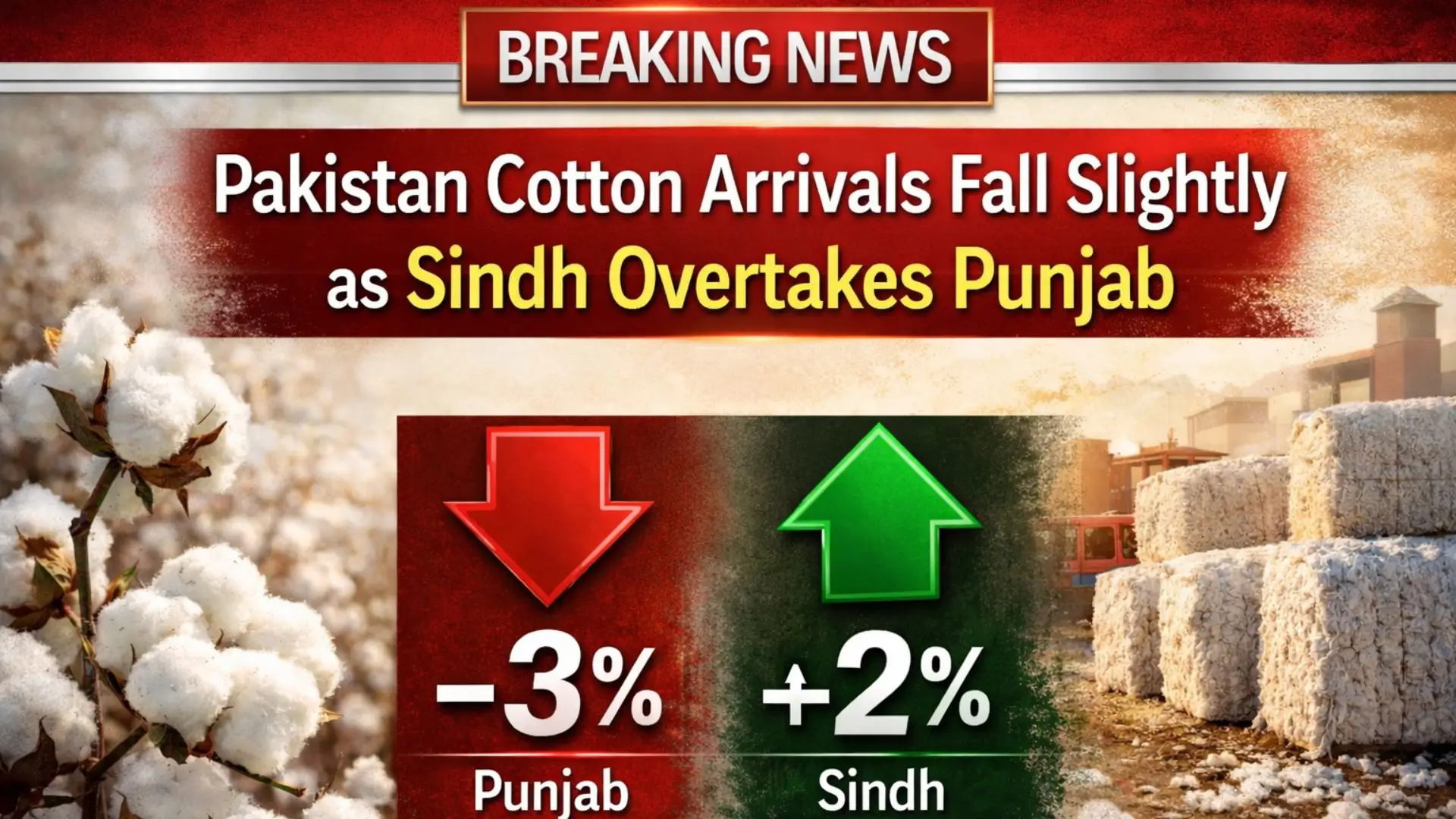
Pakistan Cotton Arrivals Fall Slightly as Sindh Overtakes Punjab. Pakistan cotton arrivals have recorded a small decline this season, while Sindh has overtaken Punjab as the country’s leading cotton-producing province. The latest figures highlight a major shift in regional cotton output and raise concerns about Punjab’s long-term position in the sector.
National Cotton Arrivals Down 1.23%

According to fresh data released by the Pakistan Cotton Ginners’ Association, total cotton arrivals across Pakistan have reached 5.3 million bales so far this season.
This shows a 1.23 percent decrease compared to the same period last year. While the drop is not large, it signals continued pressure on Pakistan’s cotton crop due to climate stress, pest attacks, and changing farming patterns.
Sindh Emerges as the Leading Cotton Producer
Sindh has taken the lead this season, delivering 2.85 million bales to ginning factories by December 15, up from 2.77 million bales last year.

- Sanghar remained Sindh’s top cotton district, producing around 1.25 million bales
- Nawabshah recorded a strong growth of 56.16 percent
- Mirpur Khas showed an increase of 24.51 percent
This steady growth shows Sindh’s stronger late-season momentum and better crop recovery compared to other regions.
Punjab Continues to Lose Ground
Punjab, once Pakistan’s cotton backbone, reported a clear decline. Cotton arrivals in the province fell to 2.45 million bales, down 5.42 percent from last year.
Several major districts saw sharp drops:

- Lodhran recorded the steepest fall at 74.59 percent
- Bahawalpur declined by 9.74 percent
- Multan fell 27.81 percent
However, a few southern districts showed improvement:
- Dera Ghazi Khan increased arrivals by 34.42 percent
- Rajanpur more than doubled its output, posting 108.74 percent growth
Despite these gains, overall production in Punjab remains under pressure.
Unsold Cotton Stocks Remain High
Rahim Yar Khan continues to be the largest center for unsold cotton, with stocks standing at 0.18 million bales. High unsold inventories reflect slower buying activity and quality concerns in some areas.

Across Pakistan:
- 4.67 million bales have been sold so far
- 4.49 million bales were purchased by textile mills
- 0.64 million bales remain unsold, slightly higher than last year
Cotton Flow to Ginning Factories Slows
The fortnightly movement of cotton to ginning factories has slowed to 0.17 million bales, compared to 0.18 million bales in the same period last year. This indicates a gradual tapering of arrivals as the season progresses.
Currently, 309 ginning factories are operational nationwide:

- 163 in Punjab
- 146 in Sindh
What This Means for Pakistan’s Cotton Sector
Industry experts are closely watching whether Sindh’s late-season strength can offset Punjab’s continued decline. The shifting balance highlights deeper challenges, including:
- Climate change impacts
- Rising input costs
- Farmers switching to alternative crops
- Need for better seed quality and pest control
Without policy support and modern farming practices, Pakistan’s cotton output may face further instability.
FAQs
Why did Pakistan’s cotton arrivals decline this season?
Weather issues, pest attacks, and reduced sowing areas contributed to the decline.

Which province is leading cotton production now?
Sindh has overtaken Punjab as the top cotton-producing province this season.
Which district produced the most cotton?
Sanghar in Sindh remained the highest-producing district.
Why is Punjab’s cotton output falling?
Farmers are shifting to other crops, and many areas faced lower yields and pest damage.
How much cotton remains unsold?
Around 0.64 million bales are currently unsold nationwide.
Conclusion
Pakistan’s cotton sector is going through a structural shift. Sindh’s rising output offers some relief, but Punjab’s decline remains a serious concern. With cotton playing a vital role in exports and textile jobs, timely reforms and farmer support are essential to stabilize production in the coming years.