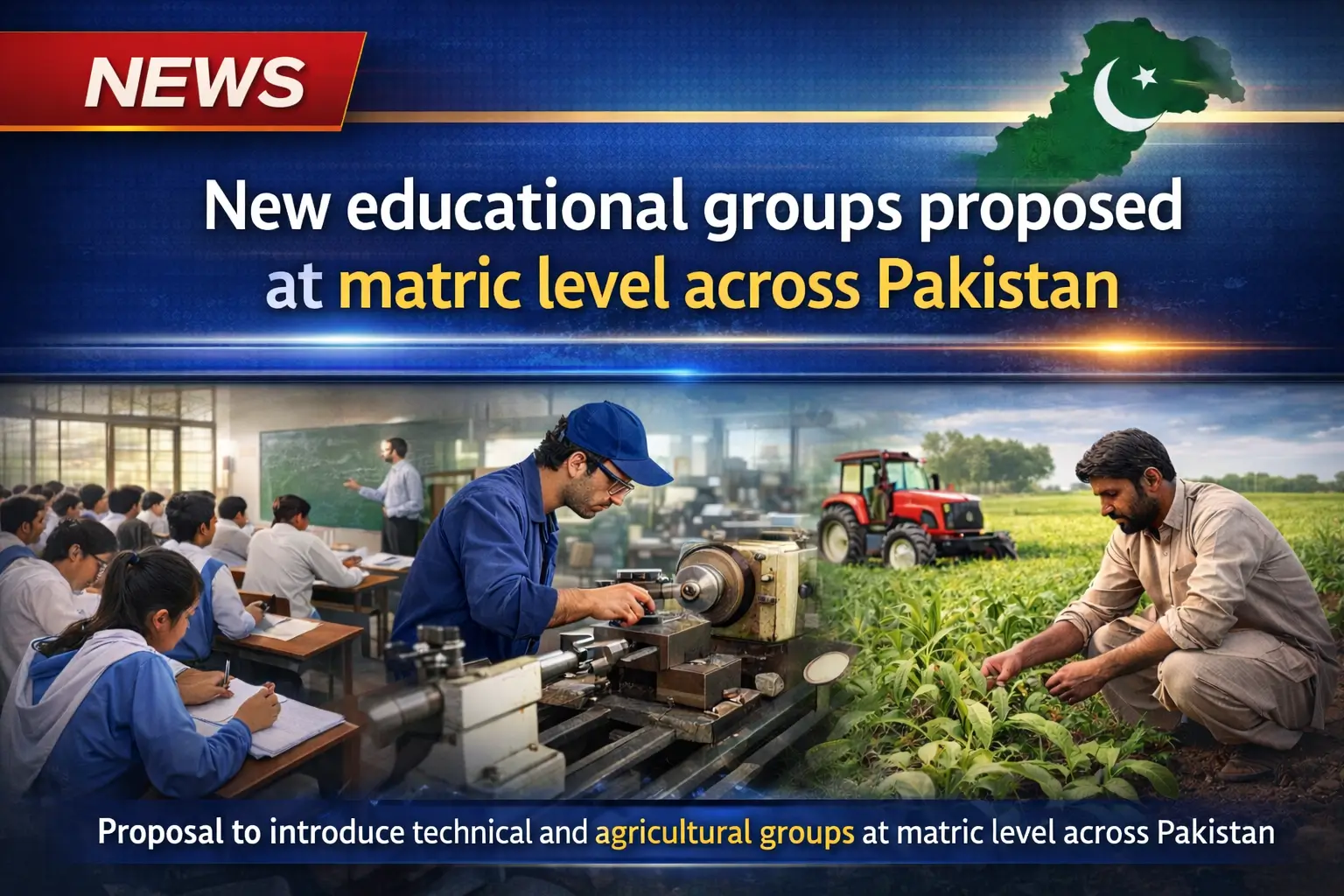
New Groups Proposed at Matric Level Across Pakistan. Pakistan’s education system may soon experience a major shift. Authorities have proposed adding two new academic groups at the matric level. These groups will focus on technical education and agriculture, giving students more practical learning options from an early stage.

The proposal has brought fresh attention to the future of school education in Pakistan, as the change could reshape how students choose their career paths after Class 10.
Why These New Matric Groups Matter
For years, Pakistani matric students mainly had limited options: Science, Arts, and Computer Science.
But with evolving job markets and changing industry demands, the government now aims to:
- Equip students with employable skills
- Encourage early technical training
- Strengthen Pakistan’s agriculture sector
- Provide more study routes before intermediate
These new groups will help students build real-world skills instead of relying only on theory-based learning.
IBCC Consultative Meeting Scheduled
The Inter Board Coordination Commission (IBCC) has called a national consultative meeting to review the proposal.
Key details include:

- Meeting Date: December 23, 2025
- Location: Islamabad
- Purpose: Review subject grouping, equivalence, and alternative study routes
The meeting will bring together education experts, board representatives, and policymakers to finalize the structure of the new groups.
Main Agenda of the Meeting
1. Review of New Subject Groupings
Officials will analyse how technical and agriculture subjects can be added into the existing matric framework.
This includes decisions on:
- Core subjects
- Practical components
- Assessment structure
- Integration with existing boards
2. New Routes to Higher Education
The IBCC will discuss how students from technical or agriculture groups can enter:
- Pre-Medical
- Pre-Engineering
- ICS
- ICom
- Humanities
The goal is to ensure that students are not blocked from mainstream academic fields due to early specialization.

3. Equivalence of Alternative Subjects
Another major point is to decide how alternative subjects at the matric level will be treated when students apply for:
- Intermediate admissions
- Medical colleges
- Engineering programs
- Technical institutes
4. Recognition of Foreign Certificates
The agenda also covers the equivalence of international qualifications, making the process easier for overseas Pakistanis and returning students.
5. Strengthening Vocational & General Education
Officials will examine how vocational training can be aligned with modern job requirements and how general education can be improved in schools.
Eligibility for Medical & Engineering Routes
A key debate will focus on whether students completing matric with:

- Technical subjects
- Agriculture subjects
will be eligible for pre-medical or pre-engineering.
The IBCC aims to set fair criteria so that no capable student is left behind.
Proposal for a National Working Group
Another important point on the agenda is the creation of a National Working Group for Education Reforms.
This group will concentrate on:
- Long-term curriculum changes
- Skills-based education
- Alignment with global standards
- Improving quality across all education boards
Impact on Students & Education Sector
If approved, the new groups will:
- Give students more choices after Class 8
- Promote early skill development
- Support Pakistan’s agriculture and technical workforce
- Reduce pressure on students chasing only science or arts
- Create smoother pathways to jobs and higher studies
This reform can modernize Pakistan’s entire education structure.

FAQs
1. What new groups are being proposed at the matric level?
The proposed groups are Technical Education and Agriculture.
2. Who has proposed these changes?
The Inter Board Coordination Commission (IBCC) has proposed the new groups.
3. When will the final decision be made?
A meeting will take place on December 23, 2025 in Islamabad to discuss and finalize the recommendations.
4. Will students from technical or agriculture groups be allowed in pre-medical?
This is a key discussion point. The IBCC will decide the eligibility criteria.

5. Will these new groups affect general education?
Yes. The reform also includes discussions on general education, vocational training, and subject equivalence.
6. Will foreign certificates also be reviewed?
Yes, equivalence of foreign educational certificates is part of the agenda.
7. Will matric technical students be able to join engineering later?
Eligibility will be determined after the IBCC meeting.
8. Why is agriculture being introduced as a matric group?
Pakistan’s large agriculture sector needs skilled young people. Early education will help strengthen this field.
Conclusion
The proposal to add technical and agriculture groups at the matric level is a forward-looking step. It reflects Pakistan’s need for a skilled, future-ready workforce. If approved, this change will give students more choices, reduce academic pressure, and support national development.